
Oil and gas extraction operations form a critical component of the American economy, employing millions of workers who handle complex processes under demanding conditions. In 2024, independent onshore producers accounted for 87% of the sector’s economic contribution, generating $277 billion and supporting 3.1 million jobs nationwide.
The scale of these operations poses corresponding safety challenges. Workers encounter substances identified by the Occupational Safety and Health Administration (OSHA) as posing immediate and chronic health risks. Effective workplace safety in the oil and gas industry depends on controlling these formulation hazards at their source rather than relying exclusively on protective equipment to manage exposure.
What Makes the Oil and Gas Industry Dangerous to Work In?
Exposure to dangerous materials occurs during routine tasks across all operational phases, making it the most frequently encountered on-site risk. Increased exposure to hazardous materials drives the sector’s elevated injury and fatality rates.
Exposure to Hazardous Materials
Extraction and transfer operations bring workers into contact with many hazardous materials, including:
- Silica
- Benzene
- Hydrocarbons
- Hydrogen sulfide
- Diesel particulate matter
When handling oil and gas chemicals, personnel face immediate risks including inhalation injuries, burns and systemic harm through dermal absorption.
The U.S. Bureau of Labor Statistics (BLS) documented these consequences in 2024 data, reporting that nine of the sector’s 92 fatalities resulted from exposure to harmful substances and environments. Fatal outcomes represent only the most severe cases. More workers sustain health damage from exposure events that cause lasting harm without resulting in immediate death. In these cases, long-term medical consequences may not manifest until years after the initial contact.
Long-Term Health Risks From Formulation Exposure
Chronic exposure to specific formulations used in oil and gas operations can cause illness that extends far beyond acute injury events. Research suggests that offshore petroleum workers exposed to benzene have a 25% increased risk of developing bladder cancer compared to workers who were never exposed. Risk increases by up to 89% after 18.8 years of cumulative exposure.
Refinery workers face additional carcinogenic risk from methyl tertiary-butyl ether (MTBE) exposure. Research on MTBE concentrations found that MTBE exceeds established carcinogenic risk limits in refinery environments, with exposure levels rising during summer months. Even non-fatal exposure events create measurable long-term health consequences that translate into workers’ compensation claims, regulatory scrutiny and workforce retention challenges.
Fires and Explosions
Operations release flammable gases and vapors during extraction, storage and transfer activities, creating ignition hazards throughout the worksite. Ignition events can cause immediate, life-threatening conditions for workers and damage equipment, halting production.
Facilities experience both the human cost of burn injuries and the financial impact of unplanned downtime. Regulatory agencies investigate root causes and assess penalties following incidents, while insurance carriers reevaluate risk ratings based on loss history.
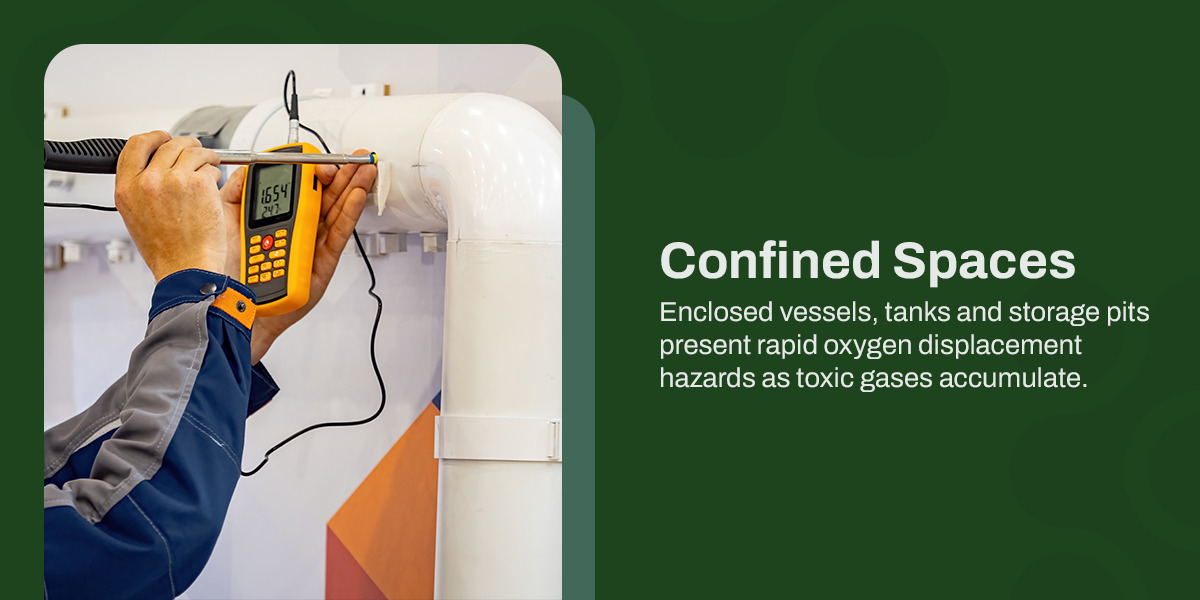
Confined Spaces
Enclosed vessels, tanks and storage pits present rapid oxygen displacement hazards as toxic gases accumulate. Limited egress routes can turn maintenance tasks into potentially fatal situations if workers enter confined spaces without adequate atmospheric monitoring and ventilation controls.
Formulation vapors concentrate quickly in confined spaces, reaching dangerous levels before workers recognize symptoms of exposure. Entry procedures that fail to account for vapor accumulation have resulted in multiple-fatality incidents, and rescue attempts can compound the initial loss.
Mechanical Failures and Struck-By Injuries
Normal operations involve heavy equipment and high-pressure systems that create crushing and impact trauma risks. BLS data from 2024 indicates that 27 of the sector’s 92 fatalities resulted from contact with objects and equipment.
Mechanical failures amplify danger when equipment releases pressurized formulations under force, combining physical trauma with exposure incidents. Workers injured in this manner often require extended medical leave, removing experienced personnel from operations and creating productivity losses that persist beyond the initial injury event.
Falls From Heights
Elevated work platforms on drilling rigs and scaffolding systems introduce fall hazards throughout oil and gas workflows. Spilled formulations create slick surfaces that increase slip risk during handling tasks, causing workers to lose footing on catwalks and elevated decks.
Transfer operations at height may result in workers sustaining impact injuries and could lead to subsequent contact with contaminated areas when landing. The combination of fall trauma and formulation exposure creates more severe injury outcomes than either hazard would produce independently.
Safer Alternatives Create Safer Operations
Substituting hazardous substances for safer ones ranks as a priority control in the National Institute of Occupational Safety and Health (NIOSH) and OSHA hierarchy. Replacing hazardous formulations eliminates exposure risk at the source. Operations that remove traditional corrosive and caustic materials from their programs reduce injury probability more effectively than relying on protective equipment or procedural controls alone.
Why Replacing Higher-Risk Chemistry Matters
Substituting safer formulations reduces exposure risk, creating a more effective control than barriers applied after hazardous substances enter the work environment. Workers handling non-corrosive, non-toxic alternatives face lower injury and illness risks than personnel managing traditional corrosive acids and caustic materials.
Operations that implement substitution strategies maintain production continuity while reducing incident costs. Facilities with documented commitments to safer formulation programs strengthen their safety reputation during client audits and regulatory inspections, supporting contract retention and workforce recruitment.
Safer Formulations for Oil and Gas Operations
Targeted substitution improves oil and gas safety by replacing harsh acids and caustics with lower-risk alternatives that still support demanding oil and gas tasks. Operations should:
- Replace corrosive acids with safer synthetic acids, such as Oil Safe AR®.
- Remove harsh caustics in favor of a synthetic replacement, such as Mud Safe CR®.
- Substitute dangerous sulfuric acid with a safer alternative, such as Phix I®.
Using safer alternatives reduces injuries and chronic illness risk while supporting OSHA and NIOSH compliance objectives and lowering workers’ compensation exposure.
Safe Practices That Strengthen Safer Formulation Use
Protocols for proper handling, storage and labeling complement safer formulation selection by creating layered protection against residual risks. OSHA exposure control guidance establishes baseline requirements for management programs that apply regardless of formulation toxicity levels.
Training programs that cover both safer formulation benefits and correct handling procedures ensure consistent application across shifts and sites. The multilayered approach minimizes residual risk while reinforcing the control effectiveness that substitution provides, producing measurable improvements in incident rates and long-term health outcomes.
Build a Safer Operation With Heartland Energy Group Ltd.
Operations that prioritize formulation substitution achieve measurable improvements in worker safety and morale while maintaining production efficiency. Replacing traditional corrosive and caustic materials removes hazards before exposure occurs, following the control hierarchy that NIOSH and OSHA recommend.
Heartland Energy Group Ltd. has developed safer formulations for oil and gas applications, allowing facilities to reduce injury risk and long-term health claims without compromising operational performance. Call our team at 877-797-2811, or contact us online to evaluate substitution opportunities at your site.

Publicações populares


Seja nosso parceiro
Alinhar-se com o Grupo Heartland Energy
Entre em contacto hoje mesmo para descobrir como as nossas soluções sofisticadas podem melhorar as suas operações nos sectores do petróleo e gás, tratamento de água, mineração, agricultura, desinfectantes e industrial. Juntos, podemos alcançar a excelência operacional e fornecer resultados duradouros e impactantes.