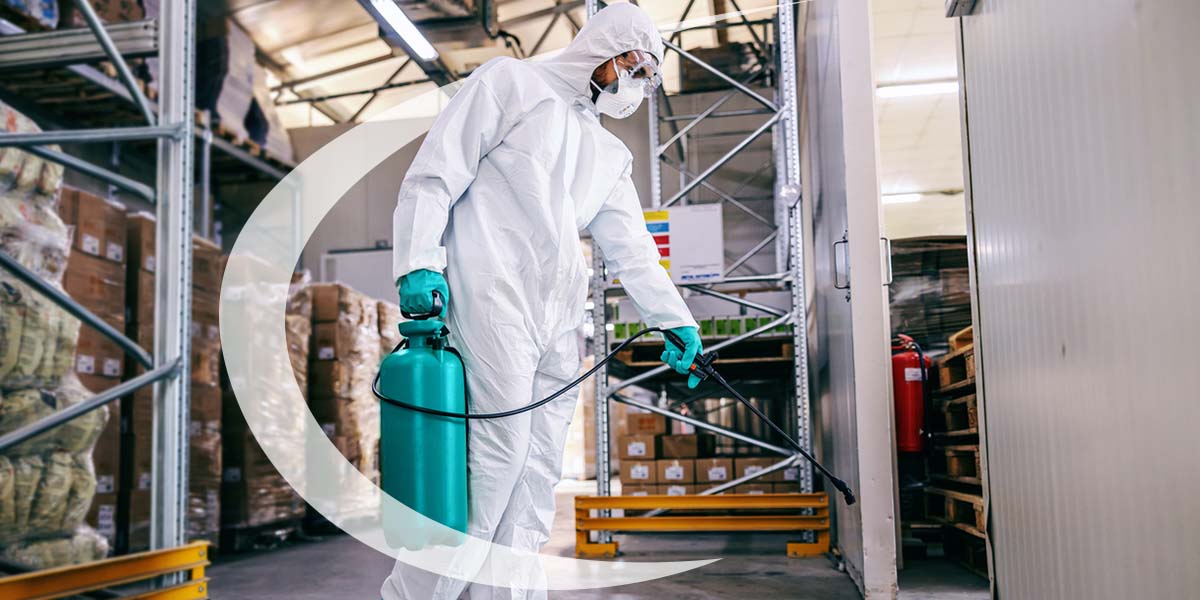
Industrial facilities face mounting pressure from stricter regulations targeting per- and polyfluoroalkyl substances (PFAS) and other hazardous substances, rising antimicrobial resistance and the need to reduce toxic exposure for workers. Traditional industrial disinfectants deliver microbial control but come with significant trade-offs. They corrode expensive machinery and may trigger respiratory complications among workers.
A new generation of non-toxic industrial disinfectants is changing this paradigm. Advanced formulations now deliver hospital-grade efficacy with safety profiles that protect both people and critical assets. These solutions leverage innovative chemistries to meet industrial hygiene standards without the hazards of harsh chemicals. This guide explores how these technologies work and what criteria to prioritize when selecting sustainable disinfectants.
The Downsides of Traditional Industrial Disinfectants
Conventional disinfectants, including quaternary ammonium compounds, bleach-based solutions and phenolic formulations, have long been the default choice for industrial hygiene programs. While effective at killing pathogens, these products impose high operational and safety costs, such as:
Operational Downtime and Equipment Damage
Corrosive agents in traditional industrial disinfectants accelerate equipment deterioration. Seals, gaskets and metal surfaces exposed to repeated contact with harsh formulations experience premature failure, leading to unscheduled maintenance and costly downtime. Electronics and sensitive instrumentation degrade even more rapidly when exposed to chlorine-based or highly acidic disinfectants.
Health and Safety Liability
Exposure to disinfectants is a significant occupational hazard. Studies link prolonged contact with quaternary ammonium compounds and bleach to respiratory sensitization, occupational asthma and contact dermatitis. These health impacts increase workers’ compensation claims, insurance premiums and expose facility operators to regulatory scrutiny. Facilities using harsh disinfectants must implement extensive personal protective equipment protocols and ventilation requirements, adding complexity and expense to routine operations.
Regulatory Compliance Burden
Hazmat-classified disinfectants require specialized storage infrastructure, detailed safety data sheets, comprehensive employee training programs and meticulous documentation of disposal. Industrial regulations continue to tighten around PFASs with federal enforcement actions targeting facilities that fail to implement proper handling protocols. The administrative burden diverts resources from core operations while creating ongoing compliance risk.
Emerging/Advanced Disinfection Technologies and Chemistry
The industrial disinfectants landscape is evolving rapidly as advanced chemistries address the limitations of traditional formulations. These next-generation solutions achieve microbial control through mechanisms that minimize collateral damage to equipment, personnel and the environment, while meeting stringent industrial hygiene standards.
Cell Lysis Buffer Technology
Cell lysis buffer chemistry, originally developed for laboratory protein extraction, has been adapted for industrial disinfection applications with significant safety advantages. These formulations work by creating osmotic pressure differentials that rupture microbial cell membranes, achieving pathogen inactivation through the same fundamental mechanism as traditional disinfectants with buffered solutions rather than harsh oxidizers or toxic organic compounds.
Some EPA-registered disinfectants utilizing this approach achieve the EPA’s lowest toxicity rating while meeting hospital-grade efficacy standards. The non-toxic, non-corrosive properties of cell lysis buffer formulations eliminate the equipment degradation, ventilation requirements and PPE protocols associated with conventional industrial disinfectants.
Bio-Safe Technologies
Bio-safe disinfectants are formulations engineered to be highly effective against pathogens while remaining inert to human tissue and industrial surfaces. These solutions achieve selective toxicity through carefully balanced chemistry that disrupts microbial structures without corroding metals, degrading plastics or irritating skin and respiratory systems.
These formulations leverage naturally occurring antimicrobial mechanisms, such as terpenoid compounds that disrupt microbial membranes or enzymes that degrade biofilm matrices, to achieve pathogen reduction. The bio-safe approach prioritizes ingredient selection based on environmental safety databases and toxicity classifications such as the EPA Design for the Environment criteria.
Advanced Oxidation Processes (AOPs)
Advanced oxidation processes generate highly reactive hydroxyl radicals through combinations of UV light, hydrogen peroxide, ozone or electrochemical activation. UV/H₂O₂ systems produce powerful oxidation without persistent chemical residues, making them suitable for water treatment and surface disinfection where rinse water can be managed. Ozone-based AOPs deliver broad-spectrum antimicrobial activity and decompose to oxygen, though they require careful engineering controls due to ozone’s respiratory irritant properties at operational concentrations.
Critical Selection Criteria for Next-Generation Commercial Disinfectants
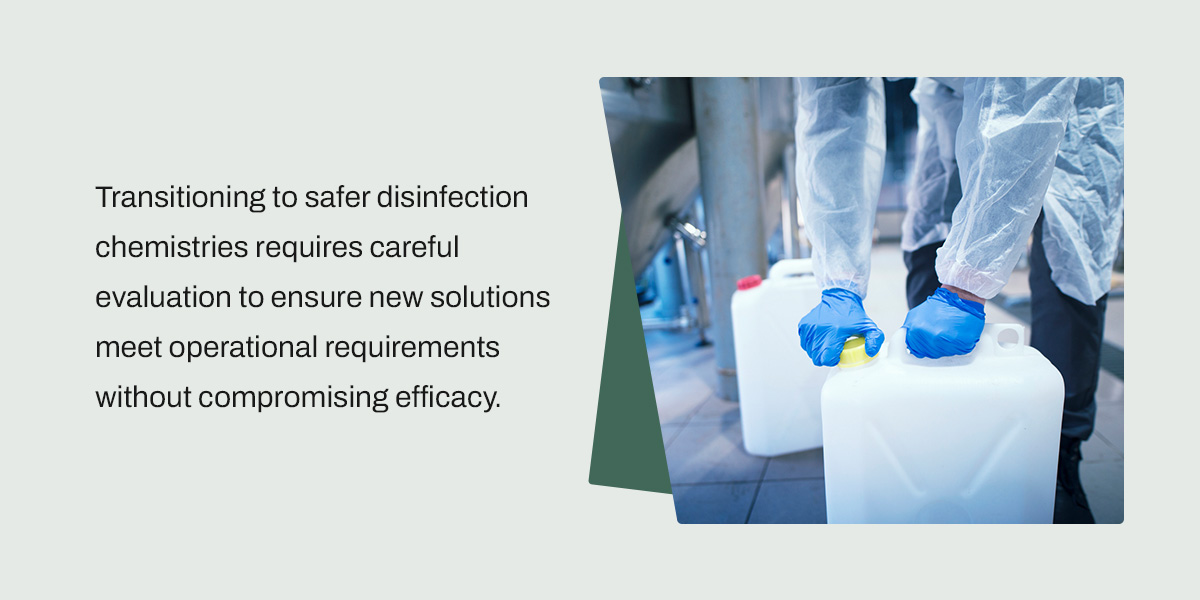
Transitioning to safer disinfection chemistries requires careful evaluation to ensure new solutions meet operational requirements without compromising efficacy. Facilities should assess commercial disinfectants against these critical criteria:
-
Efficacy verification: Sustainable disinfectants must demonstrate proven antimicrobial performance through EPA registration and third-party validation. Solutions with hospital-grade certifications provide assurance of effectiveness in demanding applications where microbial control is non-negotiable.
-
Material compatibility: Evaluate how candidate disinfectants interact with metals, plastics, seals and electronic components present in your facility. Non-corrosive formulations prevent premature equipment failure and reduce maintenance frequency.
-
Safety profile: Prioritize formulations with the EPA Category IV toxicity ratings. Non-toxic industrial disinfectants that eliminate hazmat classification simplify storage, handling and disposal while reducing liability exposure.
-
Ease of deployment: Assess whether new disinfectants integrate into existing application systems or require infrastructure modifications. Solutions that simplify rather than complicate workflows gain faster acceptance from personnel and reduce implementation risk.
-
Cost and life cycle value: Factor in equipment longevity improvements from non-corrosive formulations, reduced PPE and ventilation costs, simplified hazmat compliance and lower workers’ compensation exposure. Sustainable disinfection protocols that extend asset life often deliver superior return on investment despite higher per-gallon costs.
Best Practices for Implementing Sustainable Disinfection Protocols
Transitioning to advanced disinfection protocols requires systematic planning to ensure consistent performance and regulatory compliance.
Establish Standard Operating Procedures
Detailed standard operating procedures create consistency across shifts and personnel changes. Document essential parameters such as:
-
Proper dilution ratios
-
Required contact times for different pathogen types
-
Application techniques for various surface materials
-
Reapplication intervals based on facility traffic patterns and contamination risk levels
These protocols serve as training foundations and provide accountability benchmarks during internal audits and regulatory inspections.
Implement Monitoring Systems
Implement monitoring systems that verify disinfection efficacy rather than relying solely on visual inspection. ATP testing provides a rapid assessment of microbial load reduction on treated surfaces, while swab analysis and laboratory culture testing offer definitive verification for critical environments. Regular monitoring identifies application gaps and validates that protocols achieve intended outcomes.
Prioritize Workforce Training
Training programs should emphasize why next-generation formulations offer superior safety profiles compared to legacy chemistries. When workers understand that new solutions protect their respiratory health while delivering equivalent microbial control, adoption resistance diminishes. Hands-on demonstrations showing proper application techniques, dilution procedures and contact time requirements build competence and confidence.
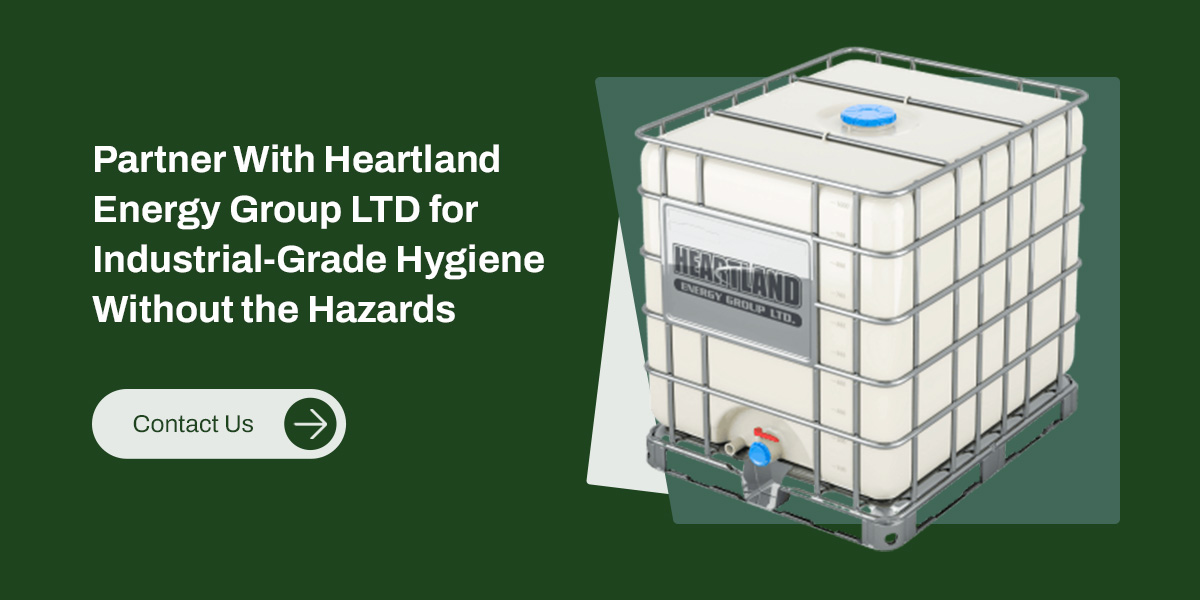
Partner With Heartland Energy Group LTD for Industrial-Grade Hygiene Without the Hazards
Industrial hygiene is shifting away from harsh disinfectant formulations toward safer, more sustainable alternatives that deliver proven efficacy without corroding equipment or endangering workers. Next-generation technologies, such as cell lysis and bio-safe formulations, meet stringent regulatory standards while reducing operational risk.
Heartland Energy Group LTD is a pioneer in this transformation, with proven solutions that deliver industrial-grade hygiene without the hazards. For instance, our Hexafectant® disinfectant uses cell lysis technology to physically disrupt pathogen membranes, delivering EPA-registered, hospital-grade efficacy that prevents the development of resistance. Our Xtreme™ Treatment Compound offers versatile, non-corrosive performance exempt from FIFRA regulations. Call us at 877-797-2811 or contact us online to upgrade your facility’s hygiene standard.
Popular Posts


Partner with us
Align With Heartland Energy Group
Reach out today to discover how our sophisticated solutions can enhance your operations across the oil and gas, water treatment, mining, agriculture, disinfectant, and industrial sectors. Together, we can achieve operational excellence and deliver enduring, impactful results.