
Every year, hazardous chemicals kill around 1.1 million workers worldwide, and toxic chemical exposure accounts for tens of millions of lost working days due to ill-health or disability.
What can be done to help reduce toxic chemical exposure in these industries?
Heartland Energy Group LTD produces high-performance formulations that provide effective results while being better for the environment, workers and companies’ sustainability efforts.
Typical Workplace Chemical Hazards
Many workplaces rely on chemicals for a wide range of applications, from cleaning to extracting materials. However, the troubling realities of harmful chemicals in the workplace are hard to ignore. According to the Occupational Safety and Health Administration (OSHA), workers suffer from more than 190,000 illnesses and 50,000 deaths annually as a result of chemical exposures. Workplace chemical exposure has also been linked to reproductive diseases and cancers.
Here are some examples of common hazardous chemicals found in workplaces in several fields:
- Asbestos
- Benzene
- Formaldehyde
- Sulfuric acid
- Ammonia
- Mercury
At Heartland Energy Group LTD, we replace corrosive acids and high-hazard solvents with high-performance formulations that are safer. Our ingredients comply with the Federal Insecticide, Fungicide, and Rodenticide Act (FIFRA), providing a more reliable and safe chemical option for various industries.
Chemical Hazards in Different Industries
Dangerous chemicals in the workplace are prevalent in many industries, from oil and gas to mining. According to the Bureau of Labor Statistics, Private industry employers reported 2.6 million nonfatal workplace injuries and illnesses in 2023. Reducing workers’ exposure to toxic and hazardous chemicals can lower the injury rate and create a safer workplace.
Here are some of the industries that encounter chemical hazards.
Oil and Gas Industry
The oil and gas industry works with dangerous chemicals and toxic gases. Workers in this field often use hydrogen sulfide (H2S), a highly toxic substance, even at low concentrations. Many toxic chemicals also include benzene (C6H6), which is a colorless gas that can affect oxygen levels in the blood and be potentially fatal. Workers may also be exposed to carbon monoxide (CO), which is odorless and colorless, making it difficult for them to detect.
In 2023, this industry experienced 27 fatalities in 17 separate incidents, emphasizing the need for more safety measures. Heartland Energy Group LTD engineers safer synthetic acid replacements, corrosion inhibitors and field-tested surfactants to help companies in this industry maximize safety and efficiency.
Mining
Mining operations require a range of chemicals that can contaminate the environment and lead to chemical accidents, potentially affecting workers’ health. For example, gold mining often involves the use of chemicals that are hazardous to workers’ health. These chemicals pollute the air and nearby soil and water, causing a damaging ripple effect on the environment and the community.
Workplace safety stats on mining exposure have revealed that up to 19 million miners in artisanal and small-scale mining (ASM) operations are exposed to mercury. Using hazardous chemicals increases the levels to which miners are already exposed from environmental sources. Occupational exposure to hazardous chemicals can lead to lifelong illnesses, disability and even death.
Heartland Energy Group LTD provides environmentally friendly and EPA-approved chemical systems that are more sustainable, making them a better choice for workers and the environment.
Industrial and Factory
Factories and plants commonly use industrial chemicals at work for different processes, exposing workers at each stage of production. Some examples of toxic chemicals used in this field include:
- Ethylene oxide: This chemical is typically used for sterilization and may increase the risk of neurological damage and has carcinogenic properties.
- Chlorine: The industry commonly uses chlorine for manufacturing plastics like PVC and water treatment. Prolonged exposure can cause respiratory issues and skin irritation.
- Cyanide: Cyanide is used in electroplating and the chemical industries. It is a known toxin, and prolonged exposure can be fatal.
Workers in this industry are exposed to hazardous chemicals through by-product interaction and handling processes. Exposure can have severe health effects, such as neurological disorders, respiratory irritation and cancer. Heartland Energy Group LTD products reduce reliance on harsh acids and high-hazard solvent degreasers. Our formulations offer safer alternatives to reduce health hazards while still maximizing operational efficiency.
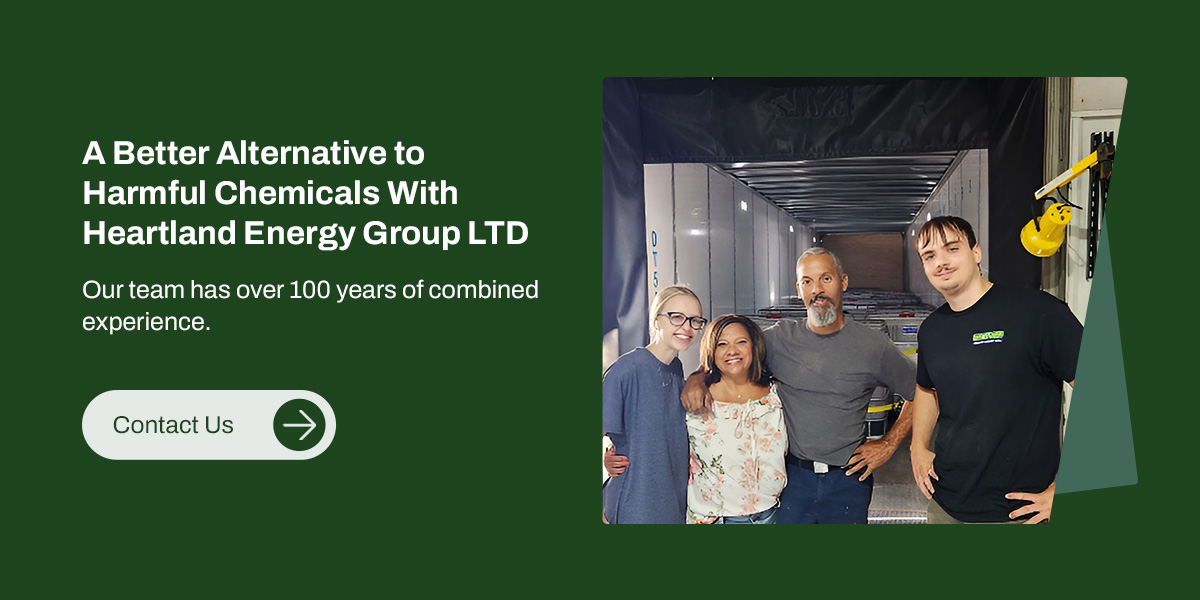
A Better Alternative to Harmful Chemicals With Heartland Energy Group LTD
At Heartland Energy Group LTD, our green technologies offer environmentally responsible alternatives to harmful chemicals that are better for workers and the planet in industries like mining, manufacturing and oil and gas. Since 2006, we’ve been providing formulations that are designed to be non-toxic, non-corrosive and built for compliance. Our team has over 100 years of combined experience, and our commitment to safety, integrity and consistency is evident in every product we produce.
Call us today at 877-797-2811 or request a quote for formulations that are reliable, safer and better for you.
Popular Posts



Partner with us
Align With Heartland Energy Group
Reach out today to discover how our sophisticated solutions can enhance your operations across the oil and gas, water treatment, mining, agriculture, disinfectant, and industrial sectors. Together, we can achieve operational excellence and deliver enduring, impactful results.